Lubricant compatibility matters more than many people realize. Sex toys are made from a wide range of materials, each with distinct chemical properties, durability limits, and hygiene considerations. Using an incompatible lubricant can damage a toy’s surface, shorten its lifespan, or create cleaning and safety issues over time.
For both beginners and experienced users, understanding how lubricants interact with different sex toy materials is essential. This article answers a common question clearly and responsibly: Is silicone lube safe for sex toys? The answer depends entirely on the material the toy is made from.
Why Lubricant Compatibility Matters
Sex toys are designed to be body-safe, but that safety assumes proper use and care. Lubricants are part of that equation. When a lubricant chemically interacts with a toy’s material, it can alter the surface in ways that affect comfort, cleanliness, and durability.
Compatibility is not about personal preference or price point. It is about chemistry. Knowing which lubricants work with which materials helps protect your investment and supports safer long-term use.
What Is Silicone Lube?
Silicone lubricant is made from silicone-based polymers, most commonly dimethicone or cyclomethicone. These compounds create a smooth, slippery layer that stays in place far longer than water-based lubricants.
Key characteristics of silicone lube
- Long-lasting and slow to evaporate
- Does not dry out quickly
- Waterproof and effective in wet environments
- Chemically stable and resistant to breakdown
These properties make silicone lube appealing for extended use. However, they also explain why silicone lube is not universally compatible with all sex toy materials.
How Silicone Lube Differs From Other Lubricants
Silicone lube vs water-based lube
Water-based lubricants are primarily composed of water and thickening agents. They are:
- Compatible with nearly all sex toy materials
- Easy to clean
- More likely to dry out and require reapplication
Silicone lube lasts much longer but sacrifices universal compatibility.
Silicone lube vs oil-based lube
Oil-based lubricants include mineral oil, petroleum jelly, or plant oils. These are:
- Incompatible with many toy materials
- Difficult to clean thoroughly
- More likely to trap bacteria
Compared to oil-based lubricants, silicone lube is generally safer when used with the correct materials.
Sex Toy Materials NOT Compatible With Silicone Lube
The most important rule to understand involves silicone lube and silicone toys.
Silicone toys and chemical interaction
Silicone sex toys are made from cured silicone elastomers. Although they feel solid, they are chemically similar to silicone lubricants. When silicone lube comes into contact with silicone toys, it can cause surface interaction or swelling.
This may result in:
- A sticky or tacky surface
- Changes in texture
- Loss of smoothness
- Long-term surface degradation
The toy is not immediately destroyed, but the altered surface becomes harder to clean and may retain bacteria more easily over time.
Why this happens
Silicone bonds with silicone. When silicone lubricant sits on a silicone toy, it can partially disrupt the cured structure of the toy’s surface. This is why even high-quality, medical-grade silicone toys are generally not recommended for use with silicone lube unless the manufacturer explicitly states otherwise.
Other materials to avoid with silicone lube
Silicone lube is also not recommended for:
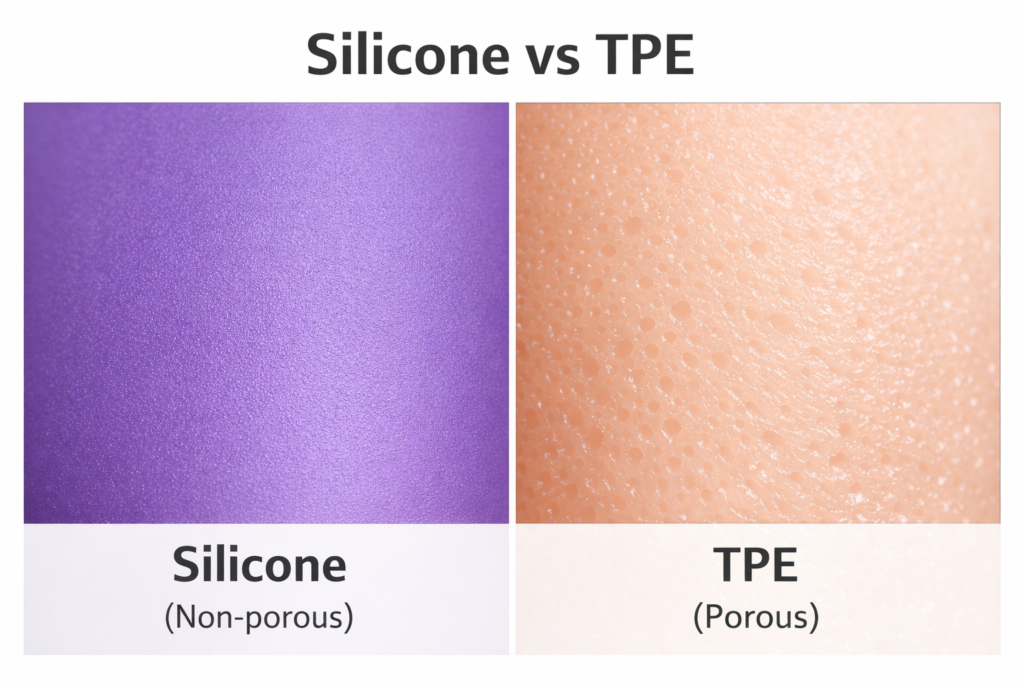
- TPR and TPE (thermoplastic rubber and elastomer)
- Jelly rubber or soft PVC
- Other porous or blended materials
These materials can absorb lubricant, increasing the risk of surface damage and hygiene issues.
Sex Toy Materials That ARE Safe With Silicone Lube
Silicone lube is generally safe to use with non-porous, non-silicone materials.
Glass sex toys
Glass is chemically inert and non-porous. Silicone lube does not interact with or degrade glass, making this a safe and low-risk combination.
Stainless steel sex toys
Medical-grade stainless steel is fully compatible with silicone lube. It does not absorb lubricant and can be cleaned thoroughly.
ABS plastic
ABS plastic is a hard, non-porous plastic commonly used in vibrators and external devices. Silicone lube does not damage ABS plastic surfaces.
Ceramic and stone
High-quality glazed ceramic and fully polished stone toys are typically compatible with silicone lube, provided the surface is sealed and non-porous.
Common Myths About Silicone Lube Safety
Myth: Silicone lube is unsafe for all sex toys
False. Silicone lube is unsafe only for certain materials, primarily silicone and porous toys.
Myth: Quick cleaning prevents damage
Cleaning does not reverse chemical interaction. Even brief contact can affect a silicone toy’s surface over time.
Myth: Expensive silicone toys are immune
Material chemistry matters more than price. Medical-grade silicone can still react with silicone lubricant.
Myth: Damage is always immediate
Some changes happen gradually and may not be noticeable until after repeated use.
How to Test Compatibility If You Are Unsure
If you cannot confirm a toy’s material or lubricant compatibility, a cautious test can help reduce risk.
Simple patch test
- Apply a small drop of silicone lube to a hidden area of the toy
- Leave it undisturbed for 24 hours
- Wipe clean and check the surface
If the area feels sticky, cloudy, swollen, or altered, do not use silicone lube with that toy.
While not perfect, this method is safer than full application without testing.
Cleaning and Care When Using Silicone Lube
Silicone lube does not dissolve easily in water, so proper cleaning is important.
Cleaning guidelines
- Wash toys with warm water and mild, unscented soap
- Use a soft cloth to remove residue
- Avoid harsh detergents or abrasive cleaners
- Rinse thoroughly to prevent buildup
Non-porous toys such as glass or stainless steel are easier to clean completely. Textured or porous materials are more likely to retain residue.
Storage tips
- Store toys only after they are fully clean and dry
- Keep different materials separate during storage
- Avoid prolonged contact between silicone toys and silicone-lubed items
Choosing Safe Lubricants for Sex Toys
When selecting a lubricant, always consider the toy’s material first.
- Silicone toys: use water-based lubricants
- Glass, steel, ABS plastic: silicone lube is generally safe
- When in doubt: water-based lubricants are the safest default
Understanding sex toy compatibility helps protect your toys and supports safer, more hygienic use.
Conclusion: Is Silicone Lube Safe for Sex Toys?
So, is silicone lube safe for sex toys? The answer is material-specific.
Silicone lube is not safe for silicone toys or porous materials, where chemical interaction can damage surfaces and compromise hygiene. However, silicone lube is generally safe for non-porous materials such as glass, stainless steel, ceramic, and ABS plastic.
Making informed decisions about lubricants and materials protects both your toys and your long-term safety. Compatibility knowledge is not about restriction. It is about using products responsibly and confidently.